
Maintenance is not a promise that nothing will fail. Its value is earlier recognition: a stain that changes, a valve that no longer operates normally, a toilet that begins refilling between uses, or a drain that repeatedly slows. Small observations provide a baseline, making it easier to describe what changed and decide whether the next step is cleaning, adjustment, repair, testing, or simply continued monitoring.
North County San Diego contains homes of different ages, materials, remodel histories, and site conditions. A schedule that makes sense for a recently renovated Vista condominium may not fit an older Escondido house, an Oceanside rental near marine air, or a San Marcos property with several prior additions. Use this guide as a repeatable inspection rhythm, then adapt it to the actual plumbing system.
Monthly: follow the water you can see
Walk through kitchens, bathrooms, laundry areas, garages, and accessible exterior connections. Look beneath sinks, around toilet bases, beside washing-machine hoses, and near the water heater. Notice moisture, mineral deposits, discoloration, softened cabinet material, odors, or an unexpected sound of water. Check several drains during normal use rather than testing with extreme flow or dismantling fittings.
Review the water bill and, when safe and permitted, compare the meter during a period when all known water use is off. The EPA's WaterSense program recommends checking for leaks and provides simple household maintenance guidance. A meter that continues to register use is a reason to investigate, but it does not identify the source; irrigation, treatment equipment, automatic appliances, and shared systems may also operate.
Quarterly: test normal operation without forcing components
Operate commonly used fixture shutoffs only if they are accessible, in serviceable condition, and you understand what they control. Do not force a corroded valve or disturb a connection that begins to move. Confirm that toilets stop filling, faucets shut off cleanly, tubs and showers drain at their normal rate, and exterior hose connections do not leak after use.
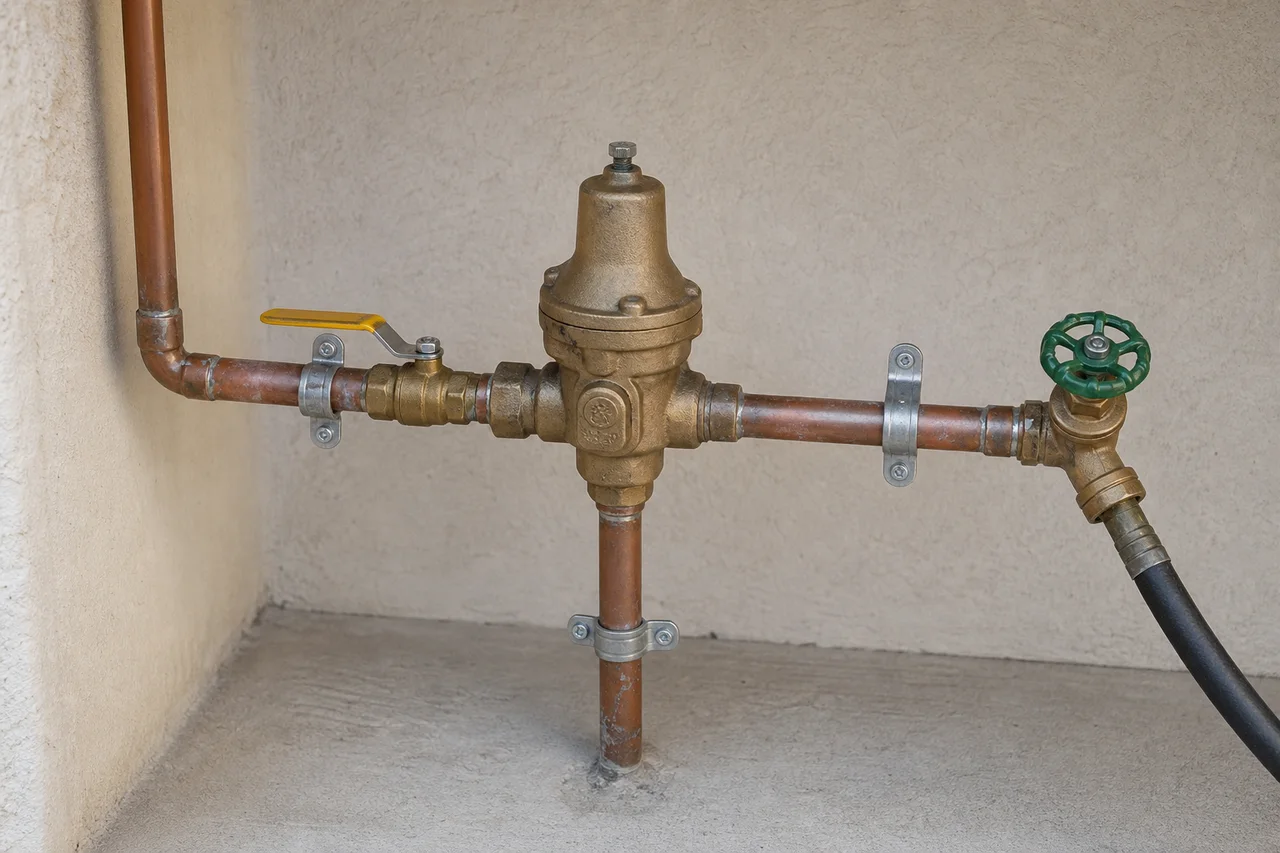
Listen for pressure-related changes such as banging, a suddenly forceful faucet, fluctuating shower flow, or appliance hoses that appear stressed. These symptoms do not prove a regulator failure, but they are useful facts. Pressure can vary with the utility system, elevation, building equipment, simultaneous use, restrictions, or the property's regulator, so diagnosis requires measurements and context rather than guessing from one fixture.
Seasonal checks for Southern California properties
Before periods of heavier household use, inspect guest-bath fixtures, little-used drains, disposal connections, and outdoor plumbing. Run water long enough to confirm normal drainage and refill traps, while watching for leaks. Before rainy periods, keep exterior cleanouts and service points visible and accessible; do not bury or landscape over components that may be needed during diagnosis or maintenance.
Hot, dry weather can expose irrigation leaks and increase demand, while cooler months may reveal water-heater capacity or temperature complaints. Separate irrigation observations from interior plumbing before drawing conclusions. If a leak appears on the utility side of a meter or involves a district-owned component, contact the water provider. Responsibility boundaries differ, and a plumber should not be assumed to control utility infrastructure.
Annual review: equipment, records, and access
Review water-heater age, manufacturer instructions, visible connections, venting or exhaust conditions, drain-pan condition, and any service history. Do not open combustion chambers, remove safety devices, or perform flushing without understanding the model and safe procedure. Tank and tankless systems have different maintenance requirements, and water quality, installation, and manufacturer guidance affect the appropriate interval.
Update a simple property record with the main shutoff location, cleanout access, water-heater model, known pipe materials, remodel dates, and past repairs. Photograph equipment labels and accessible conditions before they deteriorate. For rentals or managed properties, record which party can authorize shutdowns and how occupants are notified. Good records reduce repeat discovery work and help a licensed plumber evaluate changes over time.
When maintenance becomes a repair question
Move beyond observation when moisture spreads, a ceiling or wall changes, several drains slow together, the water heater leaks, pressure changes sharply, or a fixture repeatedly fails. Active water near electrical equipment, ceiling bulging, sewage backup, and an uncontrollable leak require prompt safety action. Know how to stop water only if doing so is safe, and never enter a flooded electrical area.
Avoid treating recurring symptoms as independent events. Repeated toilet stoppages, frequent drain chemicals, continuing corrosion, or a regulator adjusted again and again may point to a larger cause. Dave's Plumbing can discuss the observed pattern, property type, and location in Vista or elsewhere in North County San Diego, then confirm whether the requested assessment is within current service availability.
How this issue can differ across North County San Diego
Plumbing decisions are property-specific. Age, construction type, pressure, water use, access, prior alterations, utility responsibility, and the local permitting authority can matter more than the city name alone. The notes below are practical prompts, not assumptions about every property in a community.
Vista
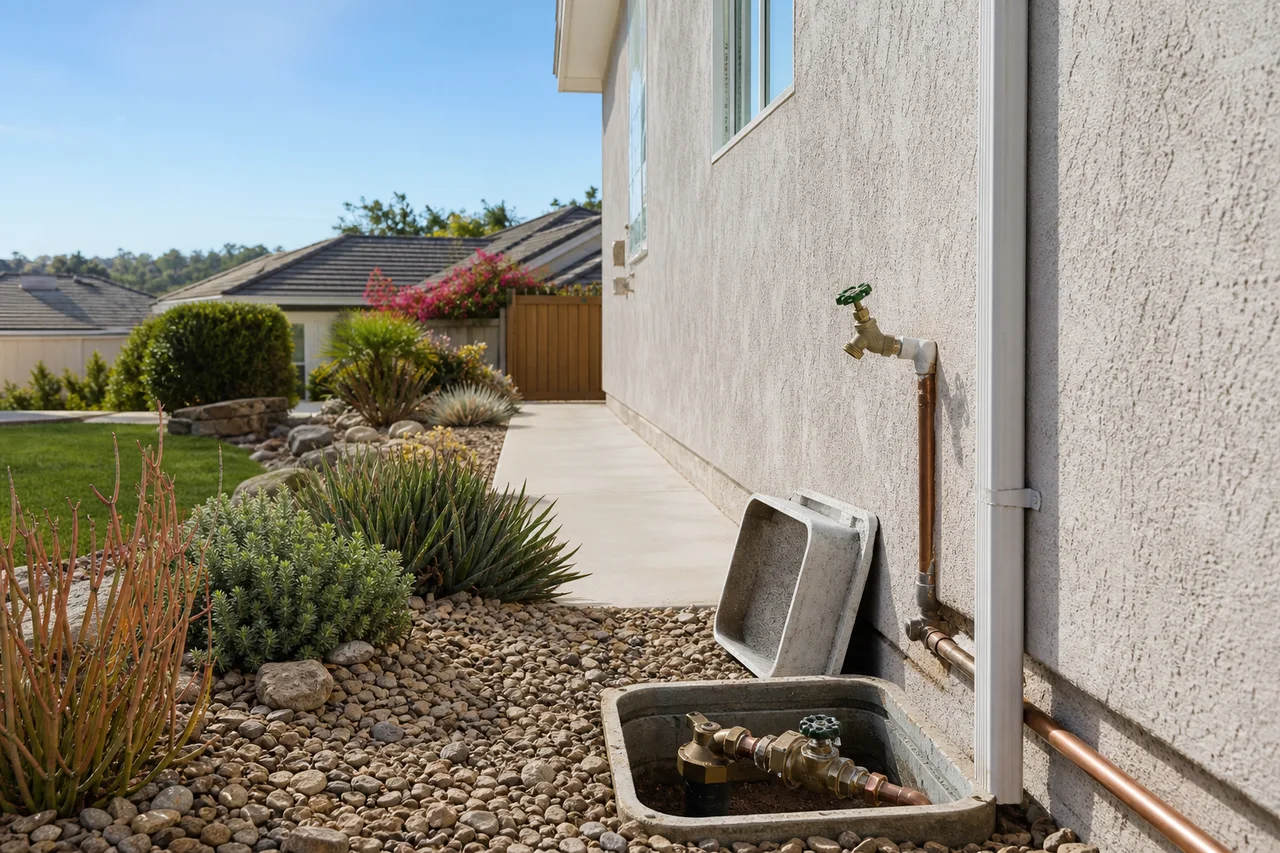
Keep exterior shutoffs, pressure components, and cleanouts visible around stucco walls and drought-tolerant landscaping.
San Marcos
For newer planned properties, retain builder documents and note whether common-area or association systems affect responsibility.
Escondido
Heat and longer service runs can make outdoor leaks or pressure changes more noticeable; compare observations at several fixtures.
Oceanside
Inspect exposed metal connections for corrosion, but do not assume every deposit means an active leak.
Carlsbad and Encinitas
Coastal conditions and remodel history make material identification and accessible connection checks especially useful.
North County rentals
Give occupants a simple reporting path and document recurring symptoms by unit, fixture, date, and time.
A useful homeowner or property-manager checklist
Good observations shorten the path from a vague symptom to a sensible next step. Before calling Dave's Plumbing, record what you can safely observe without opening equipment, entering a hazardous area, or dismantling the system.
- Date, time, and exact fixture or area
- Whether the symptom is constant or intermittent
- Any visible moisture, staining, corrosion, or odor
- Which other fixtures were operating
- Recent utility, landscaping, appliance, or remodel work
- Location of the main shutoff and accessible cleanouts
- Water-heater model and visible age information
- Photos that do not require entering an unsafe area
Photos, equipment model information, prior invoices, and a simple timeline can help establish context. Do not delay a safety response to collect documentation. For active flooding, electrical exposure, a gas odor, or another immediate danger, leave the unsafe area and contact the appropriate utility or 911 from a safe location.
Build a clear service brief from those observations
A service brief is not a diagnosis and does not need technical language. Its purpose is to preserve the facts, identify constraints, and state the question that needs to be answered. Work through the prompts below using only information you can obtain safely. This creates a useful record for Dave's Plumbing, a property manager, an association, a utility, or another responsible project participant.
Date, time, and exact fixture or area
Write down the observable fact in plain language. Include the room, fixture, equipment, or exterior area involved and avoid naming a cause that has not been confirmed. A precise location helps distinguish a single connection from a branch, building-wide system, neighboring unit, irrigation component, or utility responsibility.
Whether the symptom is constant or intermittent
Add the timing and pattern: when it began, whether it is constant or intermittent, and what normal use occurs immediately before it. If the symptom disappears, record that too. A repeatable trigger can guide safe testing, while an isolated event may call for monitoring or a different kind of assessment.
Any visible moisture, staining, corrosion, or odor
Describe comparisons that can be made without dismantling anything. Note what remains normal, such as nearby fixtures, cold versus hot water, another floor, or a period with no known use. Comparisons narrow the system area and keep the service request grounded in evidence rather than a broad conclusion.
Which other fixtures were operating
Identify recent changes that may matter: utility work, remodeling, appliance installation, landscaping, tenant turnover, previous service, or a new operating schedule. A change is context, not proof of fault. Include the date and available documents so the relationship can be evaluated instead of assumed.
Recent utility, landscaping, appliance, or remodel work
State access and responsibility clearly. Mention locked rooms, pets, tenant notice, association approval, roof or crawlspace restrictions, parking, cleanout access, and the person authorized to approve work. Good access information prevents a diagnosis plan from depending on an area or shutdown that is not actually available.
Location of the main shutoff and accessible cleanouts
List safety and continuity concerns before ordinary preferences. Water near electricity, ceiling movement, sewage, a gas odor, vulnerable occupants, food-service operations, or a critical business process changes the response. Do not enter an unsafe space to collect details; use the utility or emergency authority when the condition calls for it.
Water-heater model and visible age information
Attach only useful records: dated photographs, equipment labels, relevant utility history, plans, prior invoices, inspection results, and videos. Preserve original files when possible. Do not send payment information, tenant medical details, access codes, or other sensitive data in a general website request.
Photos that do not require entering an unsafe area
Finish with the decision you need help making. Examples include whether an assessment is appropriate, what access should be prepared, which equipment specifications are needed, or how a planned project should be coordinated. A defined question produces a clearer conversation than asking for a price before the condition and scope are known.
Keep the brief with the property's plumbing records and update it when conditions change. If work is completed, add the final scope, provider, date, permits or inspection records when applicable, equipment information, and any follow-up instructions. That history can reveal recurrence and gives future owners or managers a more reliable starting point.
When several people are involved, use one current version rather than separate text-message threads. Mark unverified assumptions as questions, record who controls access and approvals, and confirm any utility or jurisdiction requirement directly with that authority. Clear records do not eliminate field investigation, but they reduce avoidable confusion and make later decisions easier to explain.
When a professional assessment is the better next step
Online guidance is most useful for organizing observations. It cannot show concealed pipe condition, confirm code compliance, identify the exact failure, or establish the correct repair from a distance. A professional assessment becomes more useful when symptoms recur, affect multiple fixtures, involve concealed moisture, require a shutdown, or could damage finishes, equipment, neighboring units, or business operations.
Dave's Plumbing is based in Vista and discusses residential and commercial plumbing needs across North County San Diego. Call (760) 782-5780 with the property location and requested scope to confirm current availability. The California State License Board lists Dave's Plumbing under active C-36 license #1121897; license status can be checked through the official CSLB resource below.
Authoritative resources
- EPA WaterSense home maintenance — Household leak checks and water-saving maintenance guidance.
- EPA Fix a Leak Week — Official leak-detection and repair education.
- Vista Irrigation District meter guide — Local instructions for reading a district meter.
- CSLB license check — Current California contractor-license records.
Important: This guide is general education. It is not a remote diagnosis, a promise that a specific service is available, an emergency-dispatch statement, or approval by a utility, manufacturer, building department, or other authority.