Troubleshooting
Confirm the symptom, energy source, visible leakage, unit information, and whether the problem affects all hot-water fixtures.

Hot-water systems
Help assessing no-hot-water complaints, leaks, inconsistent temperature, noise, and planned water-heater replacement.
Dave's Plumbing serves this plumbing scope across San Diego County. Call with the property city and project details to confirm current availability.
The right replacement is not determined by tank size alone. Fuel type, electrical or gas capacity, venting, drainage, location, clearances, household or business demand, and permit requirements all matter.
Do not cap a relief valve, modify gas piping, or open electrical compartments without the appropriate training. If you smell gas, leave the area and contact the gas utility or 911 from a safe location.
Service scope
A safe installation matches the property, the selected equipment, and current requirements at the installation location.
Confirm the symptom, energy source, visible leakage, unit information, and whether the problem affects all hot-water fixtures.
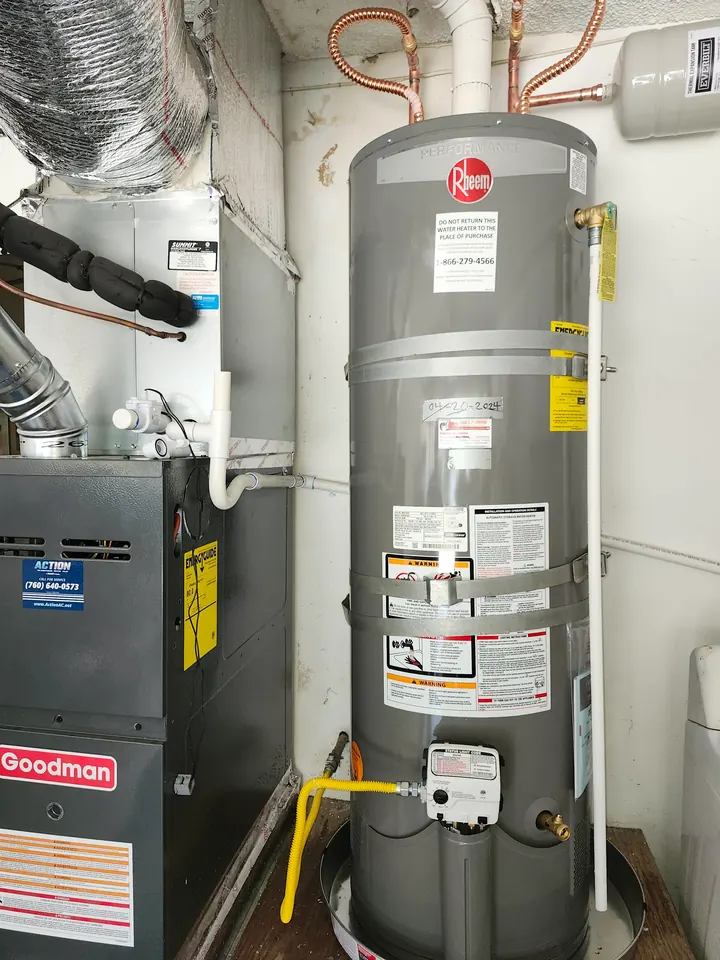
Capacity, recovery, fuel, venting, drain pan, seismic restraint, clearances, and connections should be reviewed together.
Available gas or electrical capacity, venting, water quality, flow demand, and installation location determine whether conversion is practical.
Use these pages to compare the likely scope before contacting us.
Common questions
If you can safely identify and operate the correct water and energy shutoffs, do so and call. Do not approach electrical equipment in standing water.
Sometimes, but the existing gas, electrical, venting, water, and location conditions must support the selected unit.
Demand, temperature settings, sediment, heating components, controls, or unit capacity can contribute. The pattern should be diagnosed before replacement.
Requirements depend on the jurisdiction and scope. The installation plan should confirm applicable local permit and inspection requirements.
Call to describe what you are seeing, the property type, and the best time to discuss service availability.