
Maintenance does not mean taking every valve apart or treating every drain. It means creating a repeatable baseline. A dry cabinet that becomes damp, a toilet that begins refilling between uses, or a shower that drains more slowly than it did last month is easier to investigate when the change is noticed and dated. That approach is more useful than waiting for a dramatic failure or replacing parts without evidence.
Homes across Vista, San Marcos, Escondido, Oceanside, Carlsbad, and nearby North County communities vary in age, pipe material, remodel history, access, and utility arrangements. Use this schedule as an organizing tool, then adjust it to the actual property. A condominium with association-controlled piping, a rental with several occupants, and a detached home with long exterior service runs require different records and responsibility checks.
Monthly: inspect the plumbing you can see
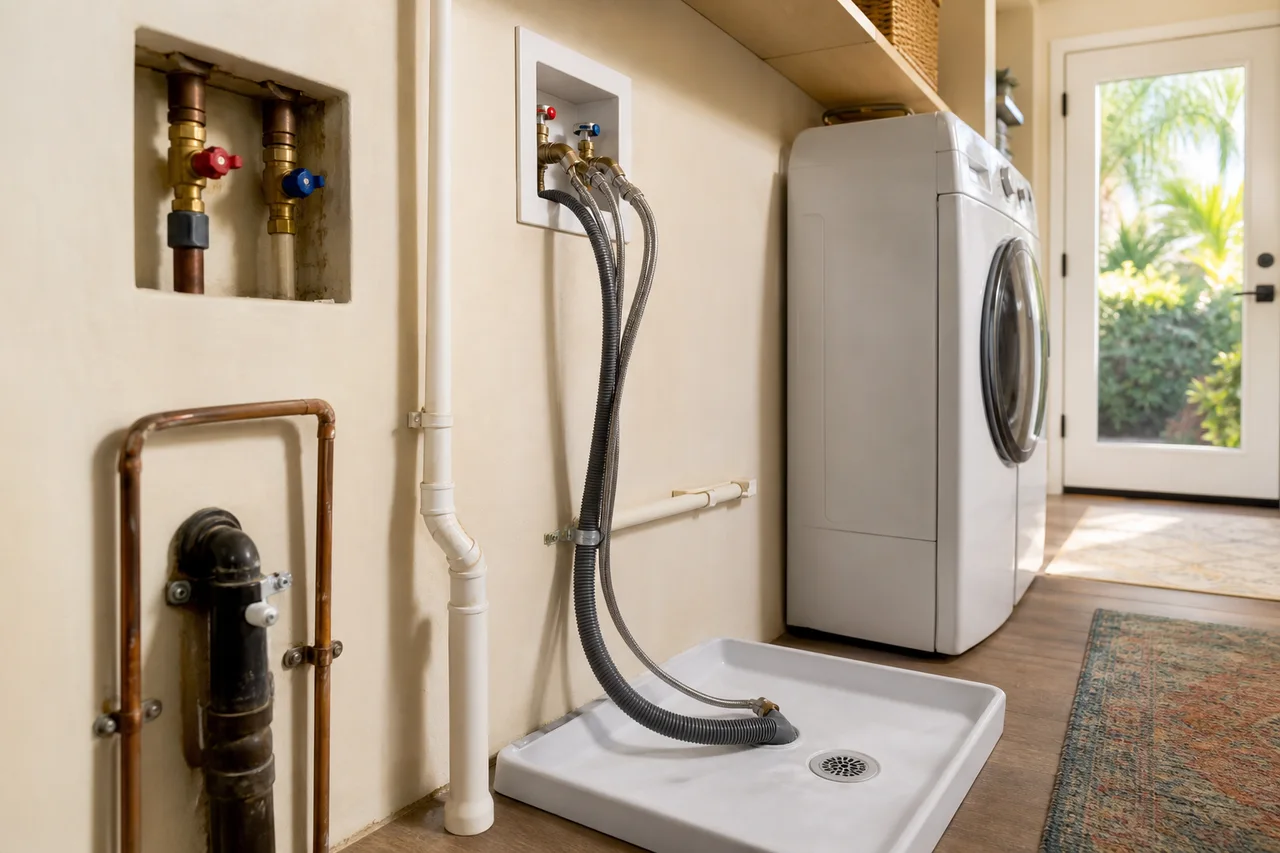
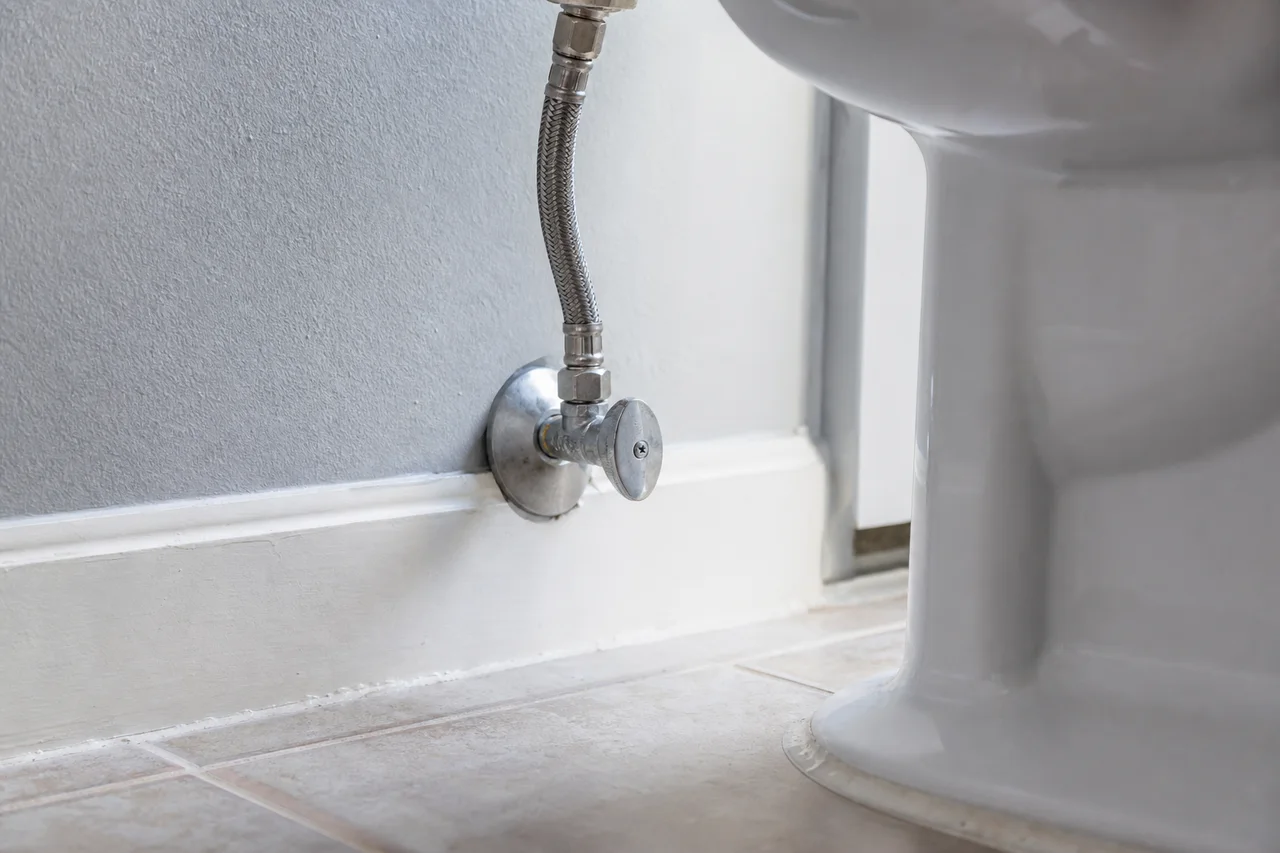
Look beneath kitchen and bathroom sinks, around toilet bases, at washing-machine hoses, beside the dishwasher, and near the water heater. Watch for moisture, mineral deposits, corrosion, softened cabinet material, lifted flooring, staining, or a musty odor. Compare dated photographs when a mark may be old. Do not move heavy appliances, remove access panels that expose hazards, or reach into water near electrical equipment.
Run fixtures normally and listen. A toilet should stop filling, a faucet should shut off cleanly, and a basin should drain at its familiar rate. One brief gurgle is not a diagnosis, but a new pattern matters. Record which fixture was used, what reacted, and whether hot or cold water was involved. That information helps separate fixture, branch-drain, supply, and equipment questions.
Quarterly: compare drains, pressure symptoms, and shutoff access
Check rarely used bathrooms, laundry drains, disposal connections, exterior hose faucets, and accessible cleanouts. Refill little-used traps with normal fixture use and note persistent odors rather than masking them. Several fixtures slowing together can indicate a different scope from one clogged stopper. Reduce water use if wastewater is backing up, and avoid mixing chemical drain products.
Know where the main water shutoff and fixture shutoffs are, but do not force corroded or unstable valves as a test. Note components that are blocked by storage or landscaping. Changes such as banging, forceful flow, weak flow at several fixtures, or stressed appliance hoses can justify pressure measurement and diagnosis; they do not prove that a pressure regulator is faulty.
Review the water meter and bill as evidence, not a verdict
Compare several billing periods while accounting for occupancy, irrigation, guests, pools, and seasonal use. If the meter is safely accessible, follow the water provider's instructions during a period when all known use is off. Do not operate a utility-owned valve or enter a restricted area. Continued registration may support further investigation, but it does not identify where water is going.
Automatic irrigation, water treatment, ice makers, pool equipment, and toilet cycling can affect observations. Write down the time and which systems were disabled or still scheduled. Vista Irrigation District publishes local meter-reading guidance, while the EPA WaterSense program provides household leak checks. Use those sources to structure observations without claiming that a single test located a hidden leak.
Give the water heater and appliances their own record
Record the water-heater model, serial number, visible age information, fuel or energy source, installation location, and service history. Look for active water, corrosion, pan condition, damaged visible connections, or a change in hot-water performance. Do not alter temperature controls, combustion components, venting, relief devices, or manufacturer-required settings based on a generic article.
Inspect accessible washing-machine and dishwasher connections without disconnecting them. Note hose material, kinks, rubbing, cabinet moisture, or an appliance cycle associated with a leak. Manufacturer instructions and the actual installation determine appropriate maintenance. A plumber's scope may not include appliance repair, restoration, mold evaluation, or work on utility-owned equipment, so confirm responsibility before scheduling.
Know when observation should become a service call
Call when moisture spreads, a ceiling changes, a fixture connection leaks, a toilet rocks, drains repeatedly slow, several fixtures react together, pressure behavior changes sharply, or the water heater shows active leakage. An uncontrollable leak, sewage backup, water near electricity, ceiling bulging, or a gas odor requires immediate safety action. Leave unsafe areas and contact the proper utility or 911 when appropriate.
Dave's Plumbing can discuss residential plumbing observations for a Vista home or another North County San Diego property, subject to current availability and scope. Share the exact location, timing, affected fixtures, shutoff access, prior repairs, and photographs. Those facts are more valuable than guessing that an entire building needs repiping or that one component is definitely responsible.
How this issue can differ across North County San Diego
Plumbing decisions are property-specific. Age, construction type, pressure, water use, access, prior alterations, utility responsibility, and the local permitting authority can matter more than the city name alone. The notes below are practical prompts, not assumptions about every property in a community.
Vista
Keep exterior shutoffs, pressure components, and cleanouts visible around stucco, garages, and drought-tolerant landscaping.
San Marcos
For association-managed properties, record whether the unit owner, association, or another party controls the affected piping.
Escondido
Compare symptoms at multiple fixtures and record outdoor or irrigation activity before assigning a cause to indoor plumbing.
Oceanside
Exposed metal can show corrosion in coastal conditions; distinguish surface deposits from confirmed active leakage.
Carlsbad and Encinitas
Retain remodel permits, fixture specifications, and photos where several generations of plumbing may be concealed.
Rental and managed properties
Give occupants one reporting method and log the unit, fixture, time, recurrence, access, and authorization contact.
A useful homeowner or property-manager checklist
Good observations shorten the path from a vague symptom to a sensible next step. Before calling Dave's Plumbing, record what you can safely observe without opening equipment, entering a hazardous area, or dismantling the system.
- Exact room, fixture, and visible condition
- Date first observed and whether it recurs
- Fixtures that remain normal
- Meter observation and scheduled water uses
- Main shutoff and cleanout access
- Recent appliance, landscape, or remodel work
- Water-heater model and service records
- Dated photos taken without entering a hazard
Photos, equipment model information, prior invoices, and a simple timeline can help establish context. Do not delay a safety response to collect documentation. For active flooding, electrical exposure, a gas odor, or another immediate danger, leave the unsafe area and contact the appropriate utility or 911 from a safe location.
Build a clear service brief from those observations
A service brief is not a diagnosis and does not need technical language. Its purpose is to preserve the facts, identify constraints, and state the question that needs to be answered. Work through the prompts below using only information you can obtain safely. This creates a useful record for Dave's Plumbing, a property manager, an association, a utility, or another responsible project participant.
Exact room, fixture, and visible condition
Write down the observable fact in plain language. Include the room, fixture, equipment, or exterior area involved and avoid naming a cause that has not been confirmed. A precise location helps distinguish a single connection from a branch, building-wide system, neighboring unit, irrigation component, or utility responsibility.
Date first observed and whether it recurs
Add the timing and pattern: when it began, whether it is constant or intermittent, and what normal use occurs immediately before it. If the symptom disappears, record that too. A repeatable trigger can guide safe testing, while an isolated event may call for monitoring or a different kind of assessment.
Fixtures that remain normal
Describe comparisons that can be made without dismantling anything. Note what remains normal, such as nearby fixtures, cold versus hot water, another floor, or a period with no known use. Comparisons narrow the system area and keep the service request grounded in evidence rather than a broad conclusion.
Meter observation and scheduled water uses
Identify recent changes that may matter: utility work, remodeling, appliance installation, landscaping, tenant turnover, previous service, or a new operating schedule. A change is context, not proof of fault. Include the date and available documents so the relationship can be evaluated instead of assumed.
Main shutoff and cleanout access
State access and responsibility clearly. Mention locked rooms, pets, tenant notice, association approval, roof or crawlspace restrictions, parking, cleanout access, and the person authorized to approve work. Good access information prevents a diagnosis plan from depending on an area or shutdown that is not actually available.
Recent appliance, landscape, or remodel work
List safety and continuity concerns before ordinary preferences. Water near electricity, ceiling movement, sewage, a gas odor, vulnerable occupants, food-service operations, or a critical business process changes the response. Do not enter an unsafe space to collect details; use the utility or emergency authority when the condition calls for it.
Water-heater model and service records
Attach only useful records: dated photographs, equipment labels, relevant utility history, plans, prior invoices, inspection results, and videos. Preserve original files when possible. Do not send payment information, tenant medical details, access codes, or other sensitive data in a general website request.
Dated photos taken without entering a hazard
Finish with the decision you need help making. Examples include whether an assessment is appropriate, what access should be prepared, which equipment specifications are needed, or how a planned project should be coordinated. A defined question produces a clearer conversation than asking for a price before the condition and scope are known.
Keep the brief with the property's plumbing records and update it when conditions change. If work is completed, add the final scope, provider, date, permits or inspection records when applicable, equipment information, and any follow-up instructions. That history can reveal recurrence and gives future owners or managers a more reliable starting point.
When several people are involved, use one current version rather than separate text-message threads. Mark unverified assumptions as questions, record who controls access and approvals, and confirm any utility or jurisdiction requirement directly with that authority. Clear records do not eliminate field investigation, but they reduce avoidable confusion and make later decisions easier to explain.
When a professional assessment is the better next step
Online guidance is most useful for organizing observations. It cannot show concealed pipe condition, confirm code compliance, identify the exact failure, or establish the correct repair from a distance. A professional assessment becomes more useful when symptoms recur, affect multiple fixtures, involve concealed moisture, require a shutdown, or could damage finishes, equipment, neighboring units, or business operations.
Dave's Plumbing is based in Vista and discusses residential and commercial plumbing needs across North County San Diego. Call (760) 782-5780 with the property location and requested scope to confirm current availability. The California State License Board lists Dave's Plumbing under active C-36 license #1121897; license status can be checked through the official CSLB resource below.
Authoritative resources
- EPA WaterSense home maintenance — Official household maintenance and leak-check guidance.
- EPA Fix a Leak Week — Practical federal leak-detection education.
- Vista Irrigation District meter guide — Local instructions for reading a water meter.
- CSLB license check — Current California contractor-license records.
Important: This guide is general education. It is not a remote diagnosis, a promise that a specific service is available, an emergency-dispatch statement, or approval by a utility, manufacturer, building department, or other authority.