
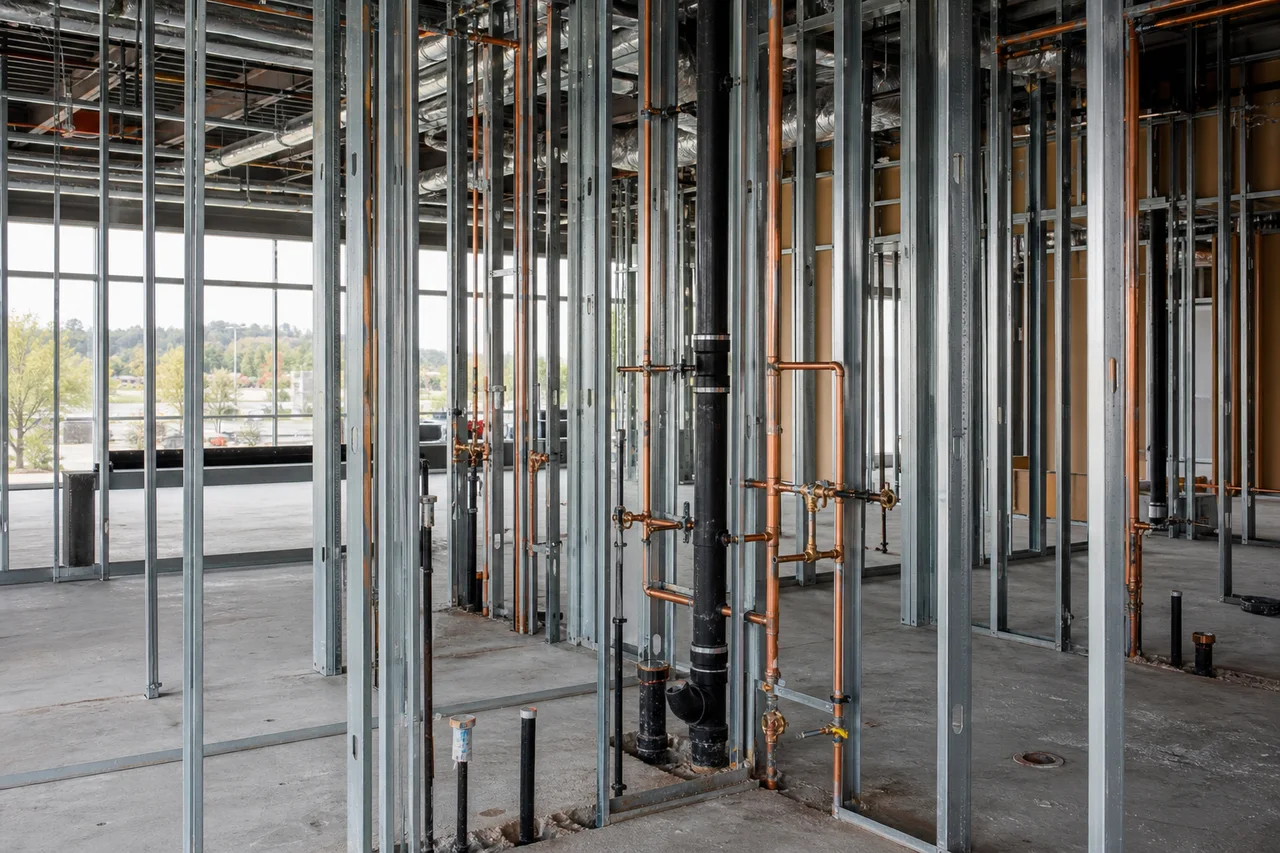
A commercial remodel often connects a new layout to an old system that was designed for another tenant. Record drawings may be incomplete, valves may not isolate as labeled, and concealed drains may not follow the expected route. A responsible preconstruction process separates confirmed facts, reasonable assumptions, and unknowns so the owner understands what can change after access or demolition.
For a Vista retail suite, San Marcos office, Escondido industrial space, or Oceanside restaurant, the plumbing scope is only one part of the project. Architecture, structure, electrical, mechanical, fire protection, waterproofing, accessibility, equipment vendors, landlords, utilities, and building officials may all affect the same wall, ceiling, or shutdown. Coordination should happen in documents and field meetings, not through last-minute trade improvisation.
Survey existing conditions before final design and pricing
Collect available plans, permits, prior repair records, camera reports, equipment data, and tenant history. Walk accessible areas to locate shutoffs, cleanouts, water heaters, pumps, interceptors, backflow assemblies, vents, drains, meters, and utility entries. Note what is concealed or inaccessible. Do not claim pipe size, route, condition, or capacity that has not been verified.
Compare proposed fixtures with the nearest confirmed supply, waste, vent, and gas systems. Identify investigation that may require access, testing, utility coordination, or selective demolition. Assign who authorizes that work and repairs finishes. If information will remain unknown until construction, put the assumption and change process in the proposal rather than treating an estimate as a guarantee.
Freeze the fixture and equipment schedule early
For each fixture or appliance, obtain manufacturer model information, rough-ins, connection sizes, flow or demand, drainage, venting, fuel or electrical needs, supports, clearances, accessories, controls, and listing requirements. A product name without a model number is not enough. Imported or specialty equipment may require additional review before it can be accepted or serviced locally.
Coordinate wall carriers, backing, floor penetrations, trenching, waterproofing, casework, counters, access panels, and finished dimensions. Review substitutions before procurement because a different bowl, faucet, sink, heater, or interceptor can affect several trades. Keep one approved schedule so purchasing, drawings, rough-in, inspection, and facilities records use the same information.
Plan shutdowns, phasing, and temporary service
Map the area controlled by each confirmed isolation point and decide how it will be tested. List affected tenants, critical operations, food or sanitation constraints, allowable windows, notices, escorts, and the person who can authorize work. Old or unlabeled valves may not isolate completely, so a contingency plan and realistic restoration window are important.
Temporary restrooms, handwashing, drinking water, process water, or business relocation may be needed depending on use and duration. Define who supplies, maintains, and removes temporary facilities and who confirms they meet applicable requirements. Dave's Plumbing should not be described as providing temporary infrastructure unless that service is specifically included in the accepted scope.
Coordinate permits, inspections, and trade interfaces
Confirm the authority having jurisdiction and whether the work is part of a building permit, a separate plumbing permit, or another approval path. The City of San Diego publishes examples of simple and plan-required plumbing permits, but a North County project must use its own jurisdiction's current process. Assign plan preparation, submittal, correction, fee, inspection, and final-status responsibilities.
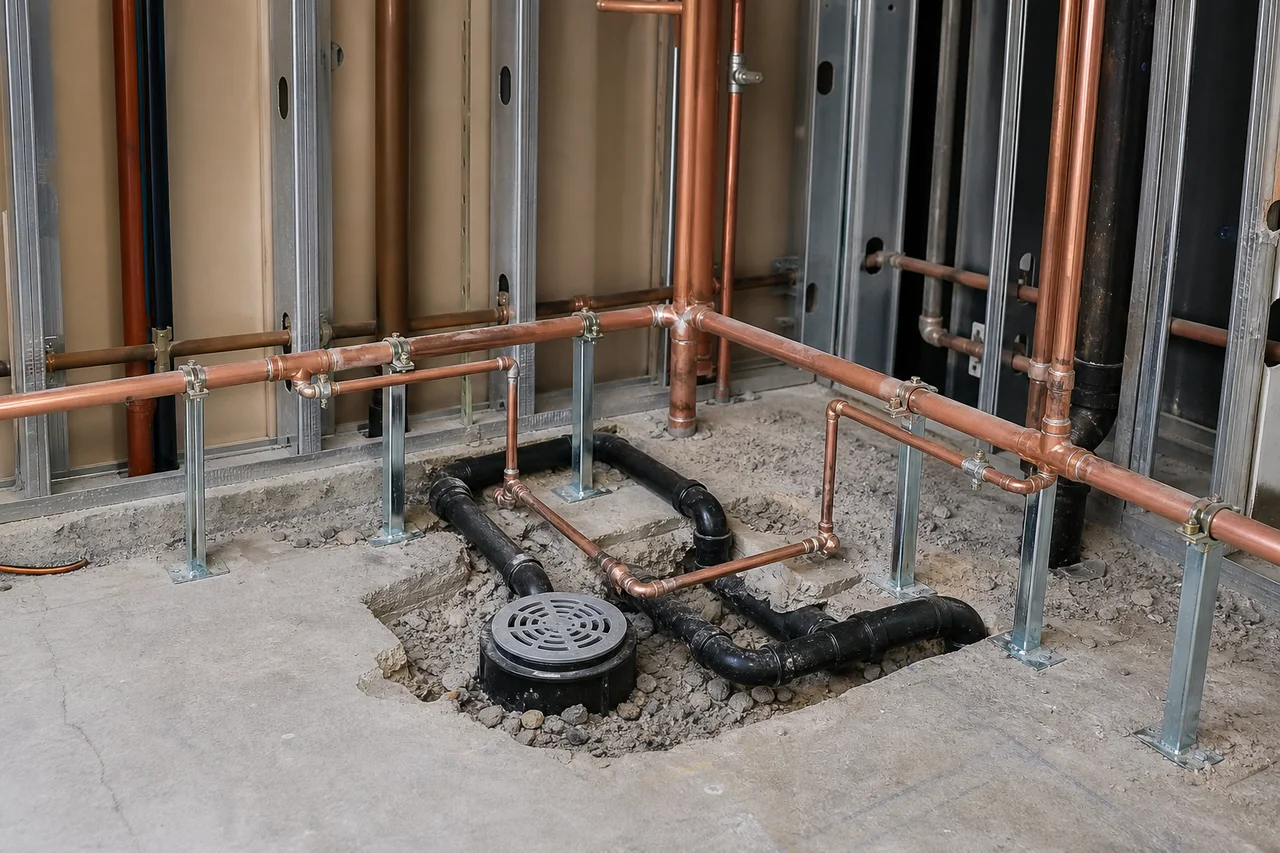
Overlay plumbing routes with structure, mechanical ductwork, electrical equipment, fire-rated assemblies, ceilings, doors, millwork, and accessible clearances. Identify required tests and inspection hold points before closing walls or pouring patches. A photograph is useful for records but does not replace an inspection or approved design. Record field changes through the responsible project process.
Define startup, closeout, and future access
Before turnover, test operation under realistic demand, check exposed connections, verify drainage, confirm controls, and complete required inspections and certifications. Label approved shutoffs and access points where the project documents call for it. Provide equipment literature, warranties, maintenance instructions, final selections, test reports, and record information to the owner or property manager.
Dave's Plumbing can discuss defined commercial renovation plumbing scopes across North County San Diego, subject to current availability, site access, plans, permits, license scope, and observed conditions. Call with the address, proposed use, construction schedule, fixture schedule, existing documents, shutdown constraints, and the role you need the plumbing contractor to perform.
How this issue can differ across North County San Diego
Plumbing decisions are property-specific. Age, construction type, pressure, water use, access, prior alterations, utility responsibility, and the local permitting authority can matter more than the city name alone. The notes below are practical prompts, not assumptions about every property in a community.
Vista
Confirm the exact city, water, sewer, landlord, and fire review path before demolition or equipment purchasing.
San Marcos
Campus, association, or master-meter systems can change shutdown authority and responsibility boundaries.
Escondido
Industrial and older commercial properties benefit from early pipe-route, process-waste, and capacity investigation.
Oceanside
Occupied hospitality, food-service, and mixed-use projects need detailed phasing, sanitation, and tenant notices.
Carlsbad and Encinitas
Protect high-finish spaces by defining access, waterproofing, patching, and model-specific rough-ins before work.
City of San Diego projects
Use the current Development Services permit path for the scope and keep it separate from North County city assumptions.
A useful homeowner or property-manager checklist
Good observations shorten the path from a vague symptom to a sensible next step. Before calling Dave's Plumbing, record what you can safely observe without opening equipment, entering a hazardous area, or dismantling the system.
- Available plans, permits, and service history
- Field-verified shutoffs, cleanouts, and equipment
- Confirmed facts, assumptions, and concealed unknowns
- Final fixture and equipment schedule
- Shutdown, phasing, and temporary-service responsibility
- Permit, design, test, and inspection assignments
- Trade overlays and access or finish restoration
- Final inspection status and closeout package
Photos, equipment model information, prior invoices, and a simple timeline can help establish context. Do not delay a safety response to collect documentation. For active flooding, electrical exposure, a gas odor, or another immediate danger, leave the unsafe area and contact the appropriate utility or 911 from a safe location.
Build a clear service brief from those observations
A service brief is not a diagnosis and does not need technical language. Its purpose is to preserve the facts, identify constraints, and state the question that needs to be answered. Work through the prompts below using only information you can obtain safely. This creates a useful record for Dave's Plumbing, a property manager, an association, a utility, or another responsible project participant.
Available plans, permits, and service history
Write down the observable fact in plain language. Include the room, fixture, equipment, or exterior area involved and avoid naming a cause that has not been confirmed. A precise location helps distinguish a single connection from a branch, building-wide system, neighboring unit, irrigation component, or utility responsibility.
Field-verified shutoffs, cleanouts, and equipment
Add the timing and pattern: when it began, whether it is constant or intermittent, and what normal use occurs immediately before it. If the symptom disappears, record that too. A repeatable trigger can guide safe testing, while an isolated event may call for monitoring or a different kind of assessment.
Confirmed facts, assumptions, and concealed unknowns
Describe comparisons that can be made without dismantling anything. Note what remains normal, such as nearby fixtures, cold versus hot water, another floor, or a period with no known use. Comparisons narrow the system area and keep the service request grounded in evidence rather than a broad conclusion.
Final fixture and equipment schedule
Identify recent changes that may matter: utility work, remodeling, appliance installation, landscaping, tenant turnover, previous service, or a new operating schedule. A change is context, not proof of fault. Include the date and available documents so the relationship can be evaluated instead of assumed.
Shutdown, phasing, and temporary-service responsibility
State access and responsibility clearly. Mention locked rooms, pets, tenant notice, association approval, roof or crawlspace restrictions, parking, cleanout access, and the person authorized to approve work. Good access information prevents a diagnosis plan from depending on an area or shutdown that is not actually available.
Permit, design, test, and inspection assignments
List safety and continuity concerns before ordinary preferences. Water near electricity, ceiling movement, sewage, a gas odor, vulnerable occupants, food-service operations, or a critical business process changes the response. Do not enter an unsafe space to collect details; use the utility or emergency authority when the condition calls for it.
Trade overlays and access or finish restoration
Attach only useful records: dated photographs, equipment labels, relevant utility history, plans, prior invoices, inspection results, and videos. Preserve original files when possible. Do not send payment information, tenant medical details, access codes, or other sensitive data in a general website request.
Final inspection status and closeout package
Finish with the decision you need help making. Examples include whether an assessment is appropriate, what access should be prepared, which equipment specifications are needed, or how a planned project should be coordinated. A defined question produces a clearer conversation than asking for a price before the condition and scope are known.
Keep the brief with the property's plumbing records and update it when conditions change. If work is completed, add the final scope, provider, date, permits or inspection records when applicable, equipment information, and any follow-up instructions. That history can reveal recurrence and gives future owners or managers a more reliable starting point.
When several people are involved, use one current version rather than separate text-message threads. Mark unverified assumptions as questions, record who controls access and approvals, and confirm any utility or jurisdiction requirement directly with that authority. Clear records do not eliminate field investigation, but they reduce avoidable confusion and make later decisions easier to explain.
When a professional assessment is the better next step
Online guidance is most useful for organizing observations. It cannot show concealed pipe condition, confirm code compliance, identify the exact failure, or establish the correct repair from a distance. A professional assessment becomes more useful when symptoms recur, affect multiple fixtures, involve concealed moisture, require a shutdown, or could damage finishes, equipment, neighboring units, or business operations.
Dave's Plumbing is based in Vista and discusses residential and commercial plumbing needs across North County San Diego. Call (760) 782-5780 with the property location and requested scope to confirm current availability. The California State License Board lists Dave's Plumbing under active C-36 license #1121897; license status can be checked through the official CSLB resource below.
Authoritative resources
- CSLB hiring guidance — Official California guidance for defining and hiring construction work.
- CSLB license check — Verify current contractor status and classification.
- City of San Diego Plumbing/Gas Permit — An official permit example; use the actual project's jurisdiction.
- City of San Diego permit FAQs — Current city tenant-improvement and permit guidance.
Important: This guide is general education. It is not a remote diagnosis, a promise that a specific service is available, an emergency-dispatch statement, or approval by a utility, manufacturer, building department, or other authority.